Why the Type of Washing Machine Matters
Most people assume that a washing machine is a washing machine, that the one sitting in the laundry cupboard at home does essentially the same job as the ones you’ll find at a local laundromat, just on a smaller scale. The reality is considerably more nuanced. Commercial laundromat machines are purpose-built for a different standard of performance, and the difference shows up in the wash results, the cycle times, and the way certain fabrics come out at the end. If you’ve ever pulled a doona out of a home washer and found it still damp in the middle, or noticed that a heavily soiled load came out looking only moderately cleaner, it’s worth understanding what separates residential and commercial washing equipment, and why more households are turning to a local laundromat for the loads that matter most.
What Are Laundromat Machines?
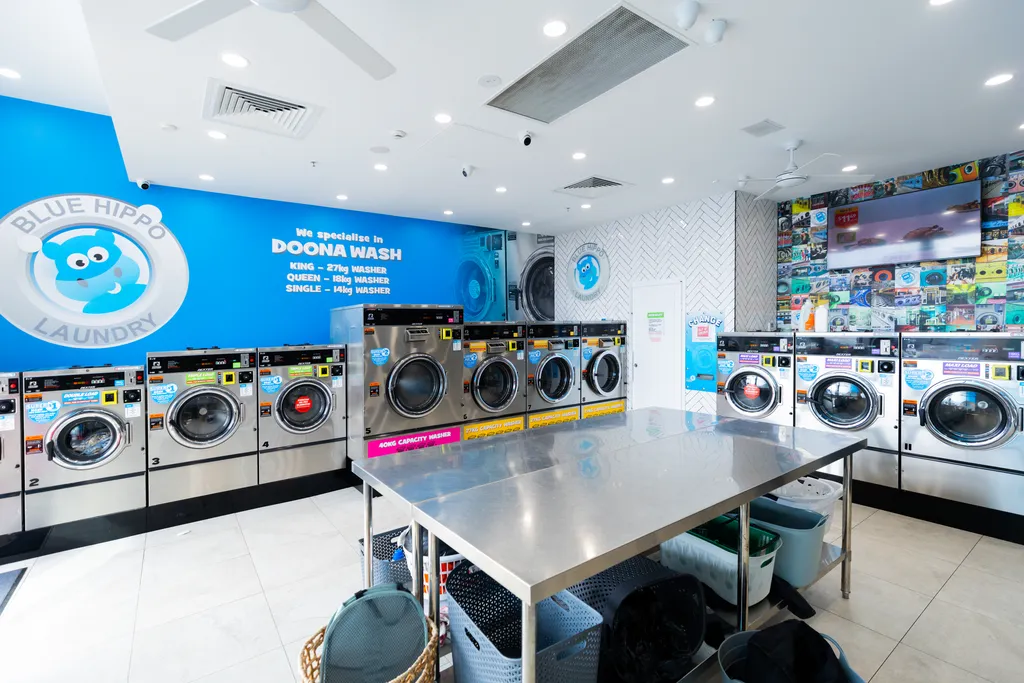
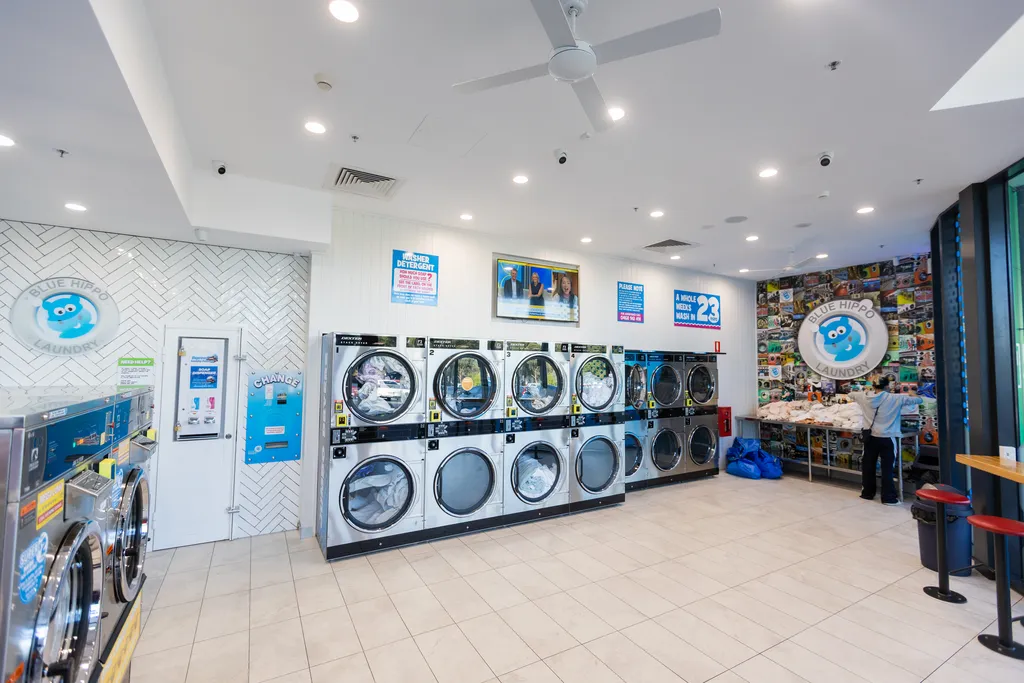
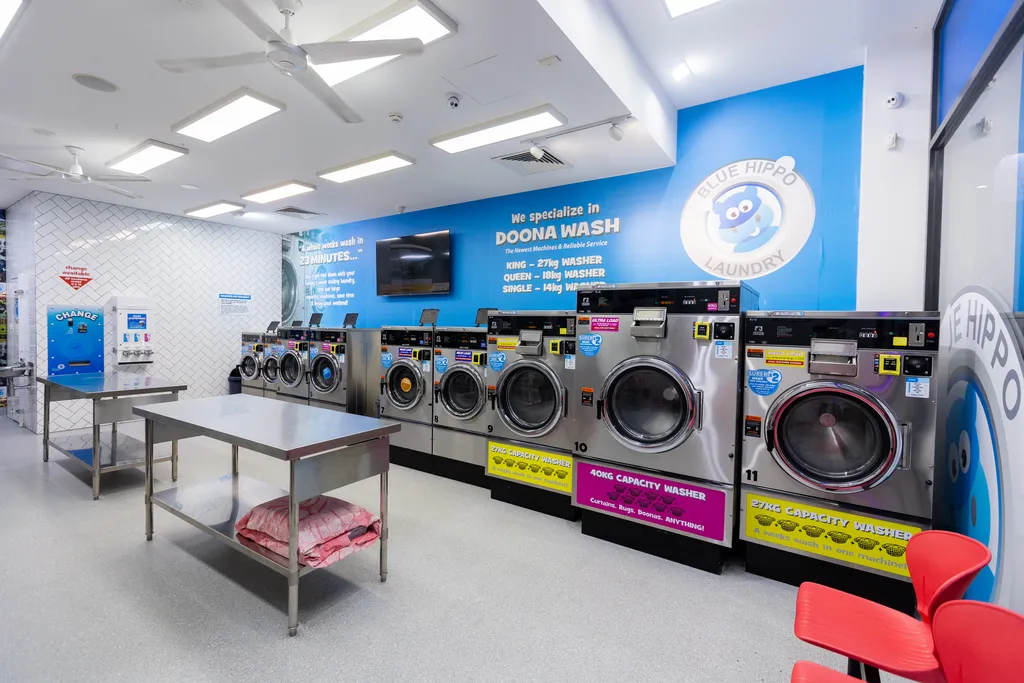
Laundromat machines are commercial-grade washers and dryers designed to run continuously throughout the day under high-demand conditions. Unlike residential appliances, which are built for occasional household use, commercial machines used in laundromats are engineered for durability, throughput, and consistent results across thousands of wash cycles.
The engineering differences begin at the frame level. Commercial washers use heavier-gauge components, more robust motor systems, and drum designs that distribute load weight more evenly across the cycle. They’re serviced regularly as part of standard laundromat operations, and they’re calibrated to handle a far wider variety of load types than the average home washer. For customers, this translates into a machine that performs to a predictable standard each and every time.
Capacity Comparison: Bigger Loads, Fewer Washes
One of the most immediate differences between residential and commercial washing equipment is drum size. Home washers typically range from around 6 to 9 kilograms in capacity, sufficient for everyday clothing loads, but limiting when it comes to bulkier items. Laundromat machines, depending on the model, can handle loads of 10, 14, or even 20 kilograms, making them the practical choice for anything that simply won’t fit at home. Winter doonas are the most common example.
A standard queen or king-size doona needs room to move freely through the water to wash properly, compressing it into an undersized drum leaves sections of the fill barely saturated. The same applies to heavy blankets, large towel sets, and workwear with thick fabric panels. Laundromat machines give these items the space they need to wash thoroughly, which means fewer repeat cycles and better results from a single wash.
Wash Power & Cleaning Performance
Commercial laundromat machines operate at spin speeds and water pressures that residential appliances generally can’t match. Higher spin speeds extract significantly more water from fabrics during the final cycle, which shortens drying time and reduces the wear that comes from extended heat exposure.
Stronger water flow during the wash cycle means detergent penetrates fabric fibres more thoroughly, which is particularly relevant for heavily soiled loads or items that have been sitting unwashed for a period of time. The result is a level of stain removal and overall cleanliness that consistently outperforms what most home setups can achieve. For households dealing with muddy school uniforms, trade clothing, or anything that’s accumulated ground-in grime, the difference is noticeable from the first wash.
Time Efficiency: Wash More in Less Time
A single trip to a local laundromat can accomplish what might take several hours of sequential washing at home. Because commercial machines are designed for faster cycle times, and because most laundromats have multiple machines available simultaneously, it’s possible to wash an entire fortnight’s worth of laundry in a single visit, all of it running at the same time.
For busy families and households that have let the laundry pile up, this is a meaningful shift. There’s no waiting for one load to finish before starting the next, no coming back two hours later to move things to the dryer, and no half-done loads sitting in the machine overnight. A well-equipped local laundromat turns a drawn-out domestic chore into something closer to a single scheduled errand.
Fabric Care & Garment Longevity
There’s a perception that more powerful necessarily means harsher on fabrics, but the design logic of modern laundromat machines works against that assumption. Commercial washers are calibrated to balance cleaning performance with fabric protection, they apply wash action more evenly across the load, which reduces the friction and agitation that causes pilling and wear over time.
For delicate items, the gentler drum movement and precise temperature controls of commercial machines offer a level of care that many home washers struggle to replicate consistently. For heavier fabrics like canvas, thick cotton, or layered workwear, the combination of greater capacity and stronger wash action means the material is cleaned properly without being subjected to the prolonged cycle times a home washer might need to achieve the same outcome.
Cost Efficiency: Laundromat vs Home Washing
Running a home washer carries costs that are easy to underestimate. Water consumption, electricity, detergent, and the ongoing maintenance of an ageing appliance all add up, and when the machine eventually breaks down or needs replacing, that cost arrives as a single, often poorly timed expense.
For households running multiple large loads each week, these figures accumulate steadily in the background. Using a local laundromat for the heavier or less frequent loads changes that equation. The per-wash cost is transparent and predictable, there are no repair bills, and the efficiency of commercial machines means fewer cycles are needed to get through the same volume of washing. For large family loads, seasonal items like winter bedding, or end-of-lease cleans, the economics of using a laundromat often compare favourably to the cumulative cost of running an ageing home machine harder than it’s designed to handle.
Reliability & Maintenance Standards
Commercial laundromat machines are maintained on a scheduled basis as a core part of how laundromats operate. Filters are cleaned, components are inspected, and machines that aren’t performing to standard are taken out of service before they become a problem for customers.
This is a fundamentally different maintenance reality to the domestic appliance that gets used daily and serviced only when something goes wrong. For customers, the practical benefit is consistency. Each visit to a well-run laundromat should produce the same quality of result, with machines that are clean, calibrated, and functioning as intended. There’s no equivalent of the home washer that’s started making a new noise, or the one that’s slowly losing spin efficiency without anyone quite noticing.
Why Choosing a Local Laundromat Makes Sense
Beyond the performance of the machines themselves, there are practical reasons why using a laundromat close to home has become an increasingly common choice. Modern laundromats are designed around the reality of busy schedules, they offer extended or 24-hour access, multiple machines running simultaneously, and a clean, secure environment that’s a far cry from the coin-operated facilities of previous decades.
A local laundromat with high-capacity machines and well-maintained premises removes the friction from the bigger laundry tasks. Whether it’s washing a season’s worth of bedding, dealing with a household that’s been sick, or simply catching up after a few weeks of falling behind, having a reliable option nearby means those jobs get done properly rather than deferred indefinitely.
When a Laundromat Is the Better Choice
There are specific situations where commercial machines consistently outperform what’s available at home:
- Washing doonas, heavy blankets, and king-size bedding that won’t fit in a standard residential drum
- End-of-lease cleaning, where large volumes of linen, towels, and soft furnishings need to be washed in a single session
- Large family loads that would otherwise require four or five consecutive home cycles
- Small business laundry needs, hospitality, beauty, childcare, or trade workwear that accumulates quickly
- Time-sensitive or emergency washing when the home machine is broken or the load can’t wait
Blue Hippo Laundry: Commercial Machines You Can Rely On
Blue Hippo Laundry operates across Victoria, New South Wales and Queensland, with modern laundromat machines maintained to a high standard at every location. Our stores are clean, well-lit, and designed for straightforward use, whether you’re in for a single large load or working through a bigger backlog.
With multiple locations across three states and more on the way, plus flexible access hours, Blue Hippo is set up to fit around real schedules. The machines do the heavy lifting—you just need to show up.
Conclusion: Commercial Performance, Everyday Convenience
The gap between home washers and commercial laundromat machines is larger than most people appreciate until they experience it directly. Greater capacity, stronger wash performance, faster cycle times, and consistent maintenance all contribute to results that a standard residential appliance simply isn’t designed to match, particularly for larger, heavier, or more demanding loads.
For the everyday load, a home washer is perfectly adequate. For everything else, the bulky items, the big family catchups, the time-critical washes, a visit to your local laundromat is often the more practical and more effective option. If you haven’t tried one recently, it might be worth reconsidering what you’ve been putting your home machine through.